— Event · Seasonal —
The Mara
Crossing.
July – October · Peak August & September · Maasai Mara, Kenya
The wildebeest do not follow the calendar. They follow the rain.
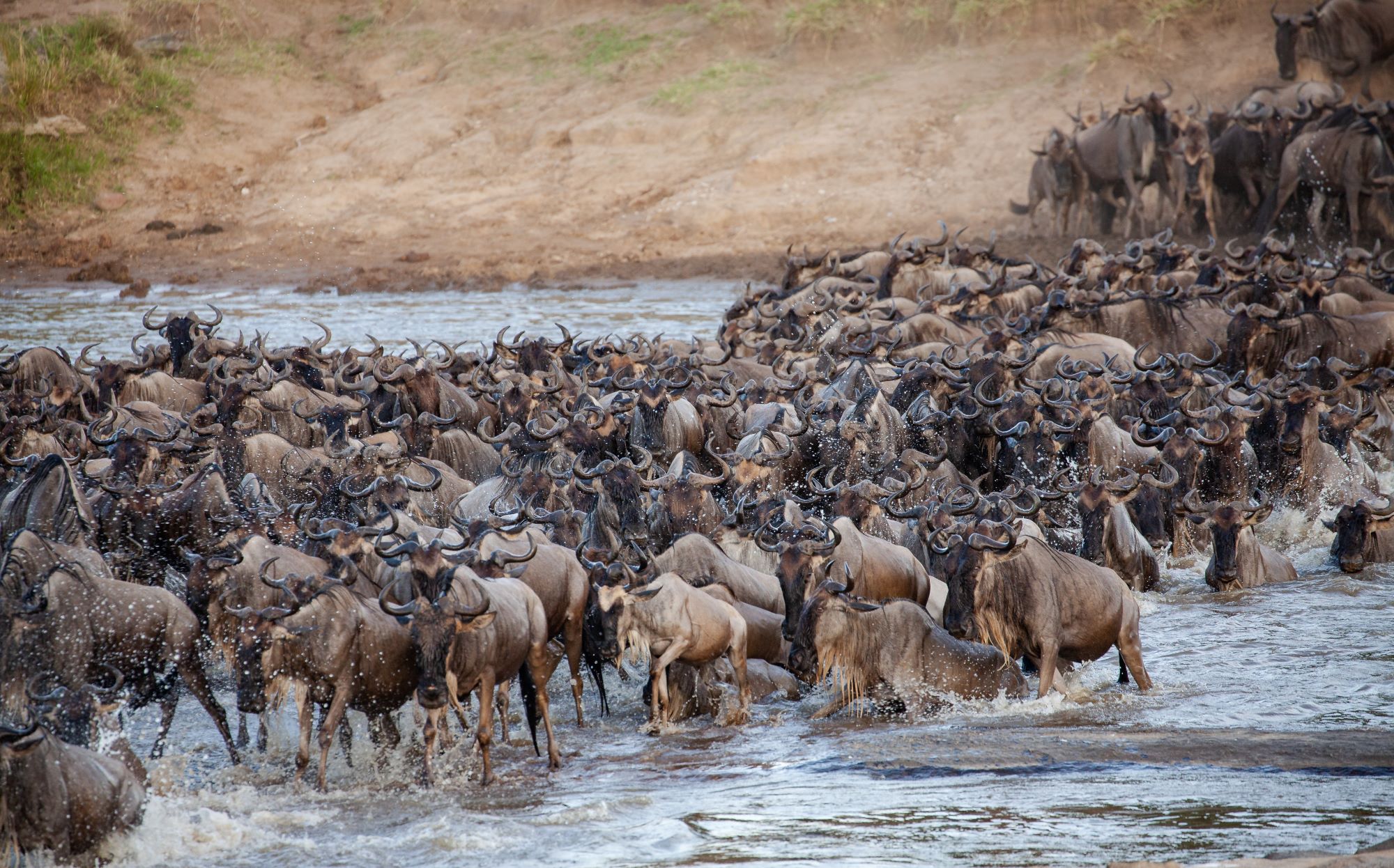
Every year, hundreds of thousands of wildebeest press northward from the Serengeti, following the grass that the rain produces. When they reach the Mara River, they stand at the bank for hours — sometimes days — pacing, retreating, milling in their thousands, until one animal finally commits and the rest follow in a roaring cascade of muscle and water and noise that is genuinely unlike anything else on earth.
The crossings are not daily events. They are not even weekly ones. But when they happen, they are the closest thing to raw wilderness most travellers will ever witness.
— When —
July – October
Herds typically arrive in the Mara from mid-July, with peak river crossings through August and September, tapering through October. A strong rainy season in April can hold the herds south into July; a dry year pulls them earlier.
— Where —
The Mara Triangle
The western Mara Triangle offers the quietest crossings and the best-managed conservancy footprint. We work with a small circle of camps positioned within striking distance of the main crossing points.
— With whom —
KPSGA-rated guides
Our lead Mara guide, James Sankale, has read the herds since 2014. KPSGA Silver-rated, raised near the Loita Hills. He leads our river-crossing journeys between July and October.
— How Solana plans it —
The right bend, the right morning.
We watch rainfall reports from northern Tanzania from February onwards. When our trusted guides in the Serengeti begin reporting column movement, we know we are two to three weeks from serious action in the Mara — and we begin adjusting itineraries for guests already booked, sometimes shifting game-drive timings, sometimes repositioning camps entirely.
We cannot promise you a crossing at ten o'clock on a Tuesday. What we can promise is that if we are at the right bend of that river on the right morning, we will be ready. Come prepared to be astonished — often by something other than what you planned for.